Top 5 Tips for Choosing the Best WordPress Hosting Providers?
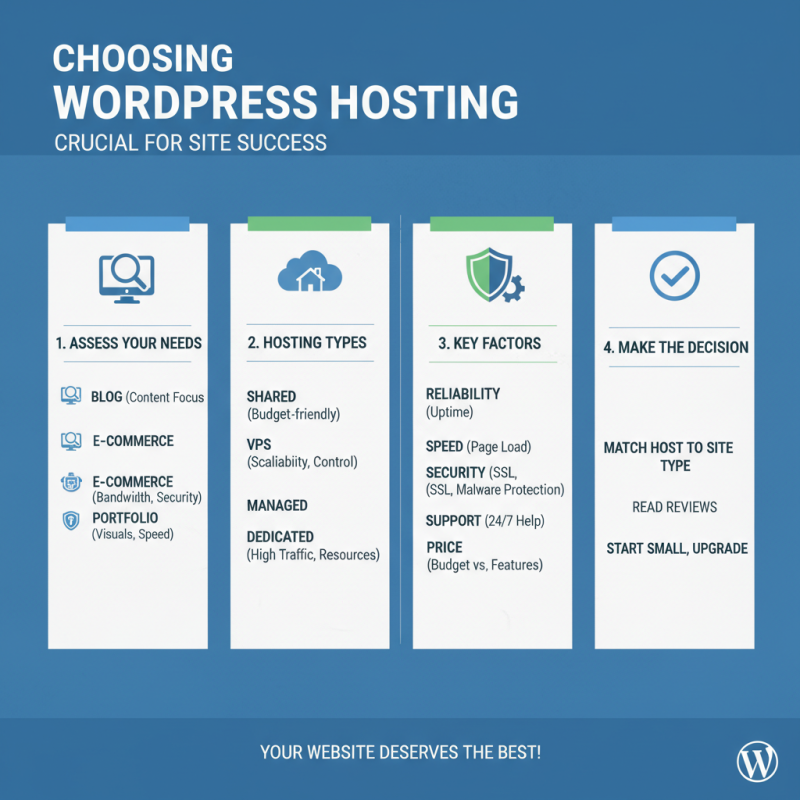
Choosing the right WordPress hosting providers can be challenging. Many factors come into play. Each provider offers unique features. Performance, support, and pricing are crucial. The best choice will depend on your specific needs.
Consider what you want from your hosting service. For instance, speed is vital for user experience. Downtime can hurt your site’s reputation. Also, think about customer support availability. A responsive team can resolve issues quickly. It's important to feel confident in your choice.
Don't forget to read reviews and experiences. Sometimes, popular providers may not meet expectations. Reflecting on others’ journeys can guide your decision. In the end, take your time to choose wisely among WordPress hosting providers. Your choice matters greatly for your online success.
Understanding the Importance of Reliable WordPress Hosting
Reliable WordPress hosting is crucial for website performance. According to a report by Google, a mere one-second delay in loading time can decrease conversions by 7%. This statistic reinforces the importance of selecting a hosting provider that ensures speed and uptime. A well-performing website not only enhances user experience but also improves search engine rankings.
When choosing a hosting provider, consider the following tips. Look for a provider with excellent customer support, as timely assistance can save you from major issues. Check the uptime guarantees. Providers with a 99.9% uptime commitment are preferable. Don’t ignore the need for scalability. As your traffic grows, your hosting should adapt without crashing.
Moreover, consider security features. A study by WP Engine shows that 43% of cyberattacks target small businesses. Investing in a host with robust security measures will protect your site and sensitive data. Lastly, assess the backup options. Regular backups can safeguard you from data loss during unexpected failures or cyberattacks.
Top 5 Tips for Choosing the Best WordPress Hosting Providers
| Criteria |
Importance Level |
Features to Look For |
Price Range (Monthly) |
| Uptime Guarantee |
High |
99.9% Uptime |
$5 - $15 |
| Customer Support |
High |
24/7 Live Chat, Email Support |
$7 - $20 |
| Loading Speed |
Medium |
SSD Storage, Caching Features |
$10 - $30 |
| Security Features |
High |
SSL Certificates, Backups |
$5 - $25 |
| Scalability Options |
Medium |
Easy Upgrades, Multiple Plans |
$8 - $40 |
Identifying Your Website’s Hosting Needs and Goals
Choosing the right hosting for your WordPress site is crucial. Before making a decision, assess your website’s needs. Are you planning to run a blog, an e-commerce site, or a portfolio? Each type requires different resources. For instance, an e-commerce site needs more bandwidth and security features.
Next, think about your goals. How much traffic do you anticipate? A small blog may thrive on basic hosting. However, a business site with many visitors will need a dedicated server. It’s vital to understand these basics. Failure to align your hosting choice with your goals can lead to slow load times or downtime.
Also, consider scalability. Your website may grow, and your hosting should accommodate that growth. Look for providers that offer flexible plans. It’s not just about now; think about the future. Reflect on what features will support your vision. Do you need exceptional customer support or advanced security measures? Make sure these aspects align with your site’s overall objectives.
Evaluating Key Features of WordPress Hosting Providers
When evaluating WordPress hosting providers, it’s crucial to consider several key features. Performance is vital. A good host should offer fast loading times. Speed impacts user experience and SEO rankings. Look for a provider with reliable uptime. Downtime can lead to lost traffic and revenue. Check the average uptime percentage. It should ideally be at least 99.9%.
Support is another critical factor. Technical issues can arise anytime. Quick and knowledgeable customer support can save you a lot of trouble. Live chat is often more efficient than ticket systems. Consider if they provide 24/7 assistance. That’s essential for sites with global audiences.
Security features should not be overlooked. Look for providers that offer regular backups and malware scans. Some may provide additional security layers, like firewalls. However, remember that no provider can ensure total security. It’s also essential to stay proactive about website safety. Always monitor and update your site regularly. This combination of features can help you make an informed decision.
Comparing Pricing and Plans Among Leading Providers
Choosing the right hosting provider for your WordPress site can be daunting. One crucial factor is pricing. Nearly 41% of users consider cost as their top priority when selecting a provider. According to recent studies, monthly plans range from $3 to $100. This wide range can confuse many potential users. Lower-priced options often come with hidden costs, affecting long-term budgeting.
Evaluating plans is equally important. Many providers offer similar features. A recent analysis showed that 60% of users don't utilize all their purchased features. This points to a mismatch between user needs and plans offered. For beginners, complex features may not add value, while advanced users may find basic plans limiting.
Many hosting companies have introductory discounts, which can allure users. However, prices often spike after the initial term. For instance, a plan starting at $5 may increase to $25 after the first year. This delay in understanding pricing can lead to unexpected expenses later. Always read the fine print before committing.
Comparison of Selected WordPress Hosting Providers
This chart compares the average pricing and performance ratings of various WordPress hosting providers based on key features like uptime, speed, and support.
Reading Reviews and Getting Recommendations for Hosting Services
When it comes to selecting a WordPress hosting provider, reviews and recommendations play crucial roles. Experienced users often share insights that can guide your decision-making process. Delve into forums, blogs, and social media where genuine feedback is abundant. Look for comments that highlight both strengths and weaknesses. It's essential to read between the lines; sometimes too glowing praises raise red flags about authenticity.
You might stumble upon conflicting reviews about the same provider. While one user raves about excellent uptime, another may mention frequent downtime. This inconsistency can be confusing. Pay attention to trends in reviews. If several users mention similar issues, they may warrant your concern. Consider reaching out to bloggers or forum members for specific questions. Their real-world experiences can illuminate aspects that reviews might overlook.
Don’t limit yourself to just one source. Gathering multiple opinions can give you a well-rounded view. However, remember that every user's experience is subjective. Your needs may differ significantly. What works for one might not work for you. Reflect on what features are a priority for your own site. Balancing reviews with personal requirements will lead you to a more informed choice.