What is a Hosting Provider and How Do You Choose One?
Choosing a hosting provider is a critical step for anyone launching a website. Many options exist, yet not all are suitable. Hosting providers offer various services, from shared hosting to dedicated servers. It can be daunting to navigate through the choices.
When selecting a hosting provider, consider your specific needs. Think about website speed, uptime, and customer support. Some providers may seem ideal, but they may not meet your expectations. Read reviews and ask for recommendations.
A reliable hosting provider impacts your website's performance. Poor choices can lead to downtime, affecting your audience. Reflecting on your choices is essential. Prioritize reliability and the specific features you require. Ultimately, your decision matters greatly in achieving online success.

What is a Hosting Provider: Definition and Overview
A hosting provider plays a crucial role in the online world. They offer the infrastructure that allows websites to be accessible on the internet. Essentially, a hosting provider allocates server space for your site. This includes storing files and serving them to users who visit your website. Once you have a domain name, the hosting provider ensures that your site is live and operational.
Choosing a hosting provider requires careful consideration. Look for features like reliability, uptime guarantees, and technical support. Compare pricing plans and storage options. Some providers offer shared hosting, while others have dedicated servers. It’s important to evaluate the scalability of their services. If your site grows, you want a provider that can support your needs.
Reading reviews is beneficial, but be cautious. Not all online feedback is genuine. You may encounter biased opinions or outdated information. Sometimes, a provider may look perfect on paper, yet their performance may not meet expectations. Consider starting with a trial plan to test their services. This direct experience can be illuminating, revealing potential pitfalls or limitations you hadn’t anticipated.
What is a Hosting Provider and How Do You Choose One?
| Hosting Type | Features | Pros | Cons | Best For |
|---|---|---|---|---|
| Shared Hosting | Limited resources, cPanel, email accounts | Cost-effective, easy to set up, user-friendly | Limited performance, not suitable for high traffic | Small websites, blogs, personal projects |
| VPS Hosting | Dedicated resources, root access, enhanced security | Better performance, scalable, customizable | More expensive, requires technical knowledge | Medium-sized businesses, growing websites |
| Cloud Hosting | On-demand resources, redundancy, scalability | Highly scalable, reliable, flexible pricing | Complex pricing, potential for high costs | Large websites, applications with varying traffic |
| Dedicated Hosting | Full server dedicated, complete control, high performance | Top performance, maximum security, highly customizable | High cost, requires server management skills | Large enterprises, high-traffic websites |
| Managed WordPress Hosting | Optimized for WordPress, automatic updates, backups | Easy WP management, enhanced performance, security | More expensive than shared hosting | WordPress sites, bloggers, online stores |
Types of Hosting Services Offered by Providers
When choosing a hosting provider, understanding the types of hosting services available is crucial. Shared hosting is popular for beginners. It is cost-effective and easy to set up. However, performance may suffer with high traffic. A recent report showed that about 39% of small businesses use shared hosting. This could impact their online visibility.
VPS (Virtual Private Server) hosting offers better performance. Users share a server, but each has a dedicated portion of resources. This setup allows for more control and stability. Approximately 21% of companies opt for VPS services, according to industry reports. However, it requires some technical know-how. It may not be ideal for everyone.
Dedicated hosting is another option. It provides an entire server for a single client. This is beneficial for large businesses needing high uptime. Yet, it often comes with a high price tag. Research indicates that only about 10% of websites use dedicated hosting. Many find it challenging to justify the cost. Understanding these options helps in making informed decisions for hosting needs.
Types of Hosting Services Offered by Providers
Key Features to Consider When Choosing a Hosting Provider
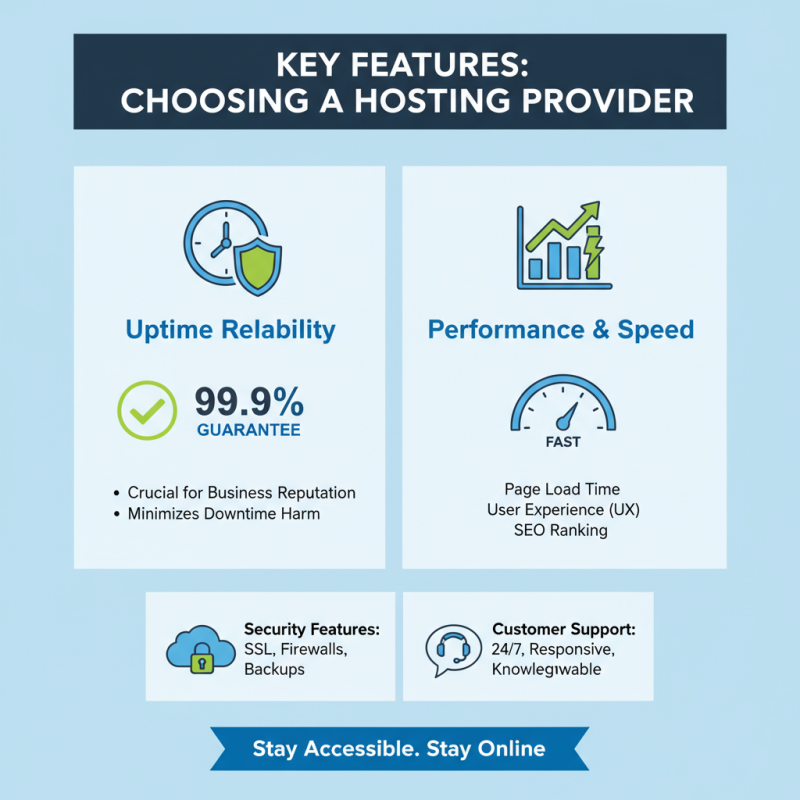
Choosing a hosting provider requires careful consideration of key features. First, assess uptime reliability. A high uptime percentage is crucial. Downtime can harm your business reputation. Look for providers that guarantee at least 99.9% uptime. This can ensure your site remains accessible to visitors.
Next, consider customer support options. Responsive and knowledgeable support can save you time and frustration. Look for providers that offer 24/7 support. Ideally, you want multiple channels to reach them, like phone, chat, or email. This flexibility can make a major difference during emergencies.
Additionally, evaluate storage and bandwidth. Consider how much data your site will require. Understand your expected traffic volume as well. A plan that seems inexpensive may not fit your needs in the long run. It’s essential to think about scalability, too. As your site grows, can the provider accommodate that growth? Reflecting on these aspects will lead to a more informed choice.
Factors Influencing the Cost of Hosting Services
Choosing a hosting provider can be overwhelming. Many factors influence the cost of hosting services. One major aspect is the type of hosting you select. Shared hosting is often cheaper, but may limit your website's performance. On the other hand, dedicated servers are pricier, offering more resources and better speed. This trade-off is essential to consider based on your site's needs.
Another key factor is the level of customer support available. Many providers offer different tiers of support, which can significantly impact pricing. A lower cost plan may lack 24/7 support, leaving you in the dark during crucial times. Ensure you assess the quality of assistance to avoid future headaches.
Lastly, the features included in each plan can vary widely. Some providers may charge extra for essential tools like SSL certificates or backups. This can lead to unexpected costs down the line. It’s crucial to examine what you truly need. Reflecting on these factors will help you make a more informed choice.
Tips for Evaluating and Comparing Different Hosting Providers
Choosing a hosting provider is crucial for your website's success. Begin by identifying your specific needs. Consider bandwidth, storage, and types of websites you want to host. Do you need shared hosting or a dedicated server? These choices significantly impact performance and costs.
Next, evaluate customer support. Fast and reliable support can save you headaches. Look for providers that offer 24/7 assistance. Check user reviews for their responsiveness. A good provider should resolve issues quickly and efficiently.
Also, assess scalability. As your website grows, your hosting service should accommodate that growth. Some providers may support additional features as you upgrade. Take time to explore these options carefully. You might find a feature that seems beneficial but turns out to be unnecessary. Reflect on what you truly require for the long haul. This thoughtful approach will lead you to a provider that meets both your current and future needs.
Related Posts
-
2026 Top Website Hosting Platforms for Your Online Success?
-

How to Choose the Best Hosting Sites for Your Website?
-

How to Choose the Best Hosting Providers for Your Website?
-

2026 Top Hosting Providers You Should Know About?
-

Top 5 Tips for Choosing the Best WordPress Hosting Providers?
-

10 Best Dedicated WordPress Hosting Services for 2026?