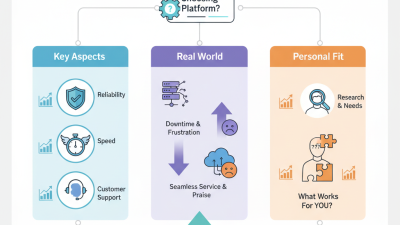
How to Choose the Best Web Hosting Providers in 2026?
In 2026, the landscape of web hosting providers has evolved dramatically. According to a recent Gartner report, 60% of businesses prioritize reliable hosting for better online performance. This indicates the importance of selecting quality service providers. With over 500 options available, the choice can be overwhelming.
Many companies struggle to identify the best web hosting providers for their needs. Factors like uptime, customer support, and security play crucial roles in this decision-making process. A survey by Website Planet revealed that 70% of users value responsive customer service when selecting a host. This highlights the need for hosting solutions that offer not only performance but also support.
Navigating the available options requires careful consideration and an understanding of your specific needs. While some users may lean toward affordability, others may seek advanced features. Recognizing these preferences is key in making an informed choice. Reflecting on feedback from current users can unveil strengths and weaknesses of different providers, ensuring a more tailored approach to web hosting selection.

Understanding Web Hosting: Key Terminologies Explained
When choosing a web hosting provider, understanding key terminologies is essential. Shared hosting means multiple websites use the same server. It’s cost-effective but can lead to slower performance. VPS hosting offers a middle ground, providing dedicated resources in a virtual environment. This option can be more costly but allows for better control and performance.
Dedicated hosting means you get an entire server to yourself. It’s the best choice for websites with high traffic but comes with higher expenses. Managed hosting takes care of the technical details. This type ensures your website runs smoothly, but users must trust the provider's capabilities.
Performance matters in hosting. Latency can affect user experience. Consider uptime guarantees; many providers promise over 99%. However, some don't deliver. Research can uncover trends in customer satisfaction. Reliable support is another crucial factor. Providers should offer 24/7 assistance. An unresponsive host can lead to significant downtime. Recognizing these terms and their implications can guide you in choosing wisely for your needs.
Assessing Your Website Needs Before Choosing a Provider
Choosing the right web hosting provider starts with understanding your website needs. Every website is unique, and a one-size-fits-all approach rarely works. According to a recent report by Statista, 37% of websites run on WordPress, reflecting an increasing demand for hosting services optimized for content management systems. Analyzing your website's purpose is crucial. Is it a simple blog, an e-commerce store, or a portfolio site? Each has its own hosting requirements.
Consider your expected traffic. A report from Netcraft shows that over 1.8 billion websites exist today. High-traffic sites need robust hosting solutions. Shared hosting might be cost-effective but lacks resources. A dedicated server or managed hosting could be necessary for higher demands. Examine your budget too. A 2023 market analysis indicated that 73% of businesses struggled with overspending on hosting. Balancing cost with performance is vital.
Security features should not be overlooked. In 2022, cyberattacks grew by 38%, underscoring the necessity for reliable security measures. Look for providers offering SSL certificates, backups, and DDoS protection. Ignoring these factors can lead to costly downtime or data loss. Reflecting on these aspects tends to reveal potential gaps in your initial analysis, guiding you toward more informed decisions.
Evaluating Performance Metrics of Web Hosting Services
When evaluating web hosting providers in 2026, performance metrics are crucial. Speed, uptime, and support are key indicators of a reliable service. According to a recent industry report, 92% of users consider uptime of 99.9% essential. A dip in performance can lead to user frustration and site abandonment.
The speed of a hosting service directly affects user experience. Google found that a one-second delay can decrease page views by 11%. Choose a provider that offers solid speed performance, ideally under 200 milliseconds for optimal user engagement.
Tip: Always test loading times using tools like GTmetrix or Pingdom before making a decision. Evaluate customer support options, too. A host should provide 24/7 expert support via multiple channels. How responsive are they to inquiries?
Security is often overlooked but essential. Look for features like SSL certificates and DDoS protection. Research shows that companies with robust security measures experience 60% fewer breaches. Don't underestimate the need for a reliable backup solution. Data loss can be devastating for your site.
How to Choose the Best Web Hosting Providers in 2026? - Evaluating Performance Metrics of Web Hosting Services
| Provider Type |
Uptime (%) |
Average Load Time (s) |
Customer Support Rating (out of 5) |
Pricing (per month) |
Storage (GB) |
Bandwidth (TB) |
| Shared Hosting |
99.99% |
1.2 |
4.2 |
$3.99 |
30 |
1 |
| VPS Hosting |
99.98% |
0.7 |
4.5 |
$19.99 |
50 |
2 |
| Dedicated Hosting |
99.99% |
0.4 |
4.8 |
$79.99 |
500 |
10 |
| Cloud Hosting |
99.95% |
0.6 |
4.6 |
$15.00 |
100 |
5 |
Comparing Pricing Models and Features from Different Providers
When choosing web hosting providers in 2026, pricing models and features require careful consideration. Monthly and annual billing options are common. Annual plans may offer cost savings, but they require upfront payment. Compare the total costs over a year to make an informed decision. Some providers have hidden fees, which can inflate prices over time. Look out for these when evaluating options.
Feature sets vary widely among providers. Some may include free SSL certificates or CDN services, while others might charge for them. A robust uptime guarantee is essential. Check how many times they have experienced outages. Customer support varies too; 24/7 availability is ideal. However, the quality of support can differ. Read user reviews for insights.
It's worth reflecting on your needs before making a choice. A feature-rich plan might not be necessary for a small blog. Conversely, growing businesses may need scalable solutions. Take the time to assess what you truly require versus what is offered. This helps avoid unnecessary expenses and ensures functionality meets your expectations.
Web Hosting Providers Comparison in 2026
Ensuring Customer Support and Reliability in Web Hosting Choices
Choosing a web hosting provider can be daunting.
Customer support plays a crucial role in this decision.
When issues arise, quick and effective assistance is essential.
Look for providers that offer 24/7 support through multiple channels, like chat and phone.
This flexibility can save you valuable time.
Reliability should also be a priority.
Check the provider’s uptime guarantees.
Aim for a service that promises at least 99.9% uptime. In case of outages, swift responses are vital.
Conducting some research on common outages can give insight into a provider’s past reliability.
Tips: Look for user reviews to gauge customer experiences.
Reviews often reveal how responsive support can be in real scenarios.
Test their customer service by asking them questions before committing.
This can highlight their expertise and willingness to assist.
Remember that every provider has strengths and weaknesses.
Reflecting on user feedback helps in understanding these nuances.