How to Buy Freeze Dried Chicken Cat Treats in Bulk?
Buying Freeze Dried Chicken Cat Treats in bulk can reduce costs, simplify restocking, and keep a cat’s favorite reward available. Yet a large carton is not automatically a smart purchase. Product quality, storage conditions, and ingredient transparency deserve careful attention before placing an order.
Experienced pet retailers often inspect the ingredient panel, guaranteed analysis, package seals, and expiration dates. Look for chicken as the primary ingredient, with clearly listed additives and feeding guidance. Ask suppliers about batch testing, manufacturing standards, and recall procedures. A reliable seller should answer directly and provide traceable lot information. Vague replies are a warning sign.
Start with a modest case if your cat has never tried the product. Cats can be selective. Some may reject a new texture, while others may develop digestive upset after eating too many treats. A veterinarian can offer useful guidance for cats with allergies, kidney concerns, or special diets. Store opened bags in a cool, dry place, and reseal them tightly. Moisture can ruin the crisp texture quickly.
Bulk buying still requires judgment. The lowest price may hide short shelf life, poor packaging, or excessive shipping exposure. I have sometimes focused too heavily on unit cost and overlooked storage space. That was a practical mistake. Compare total cost, usable quantity, shipping conditions, and your cat’s actual consumption rate. Reliable purchasing is not about filling a cupboard. It is about keeping safe, suitable treats fresh and useful.
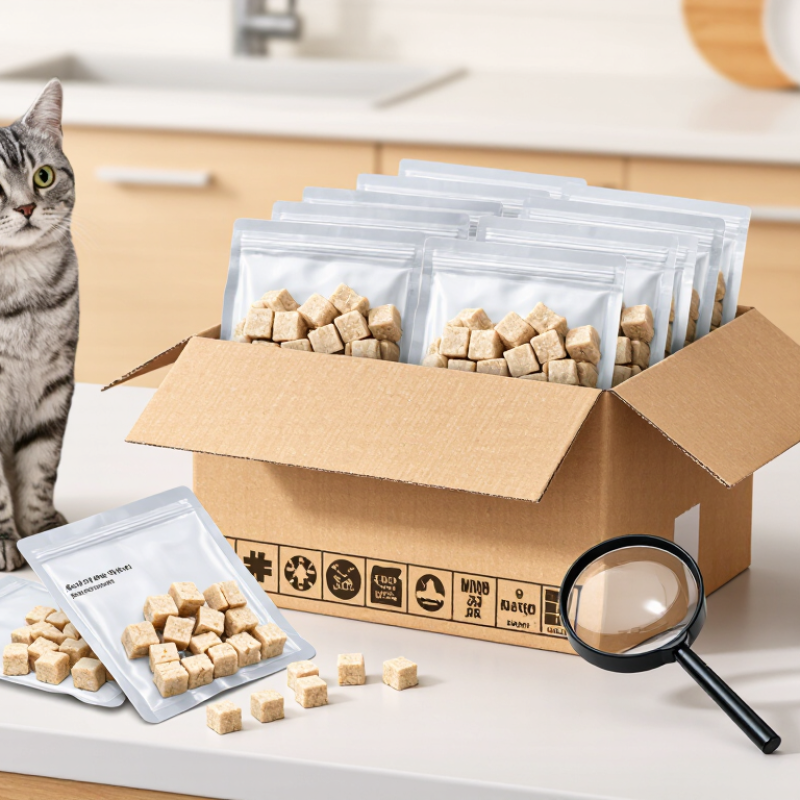
Define Your Cat’s Nutritional and Treat Requirements
How to Buy Freeze Dried Chicken Cat Treats in Bulk?
Define your cat’s nutritional and treat requirements before comparing bulk prices. Cats need animal-based protein, but treats should not replace a complete and balanced diet. The WSAVA Global Nutrition Guidelines recommend keeping treats below 10% of daily calories. For a 4-kilogram cat eating about 200 calories daily, treats should usually provide no more than 20 calories. Check the package’s calorie statement, serving size, and feeding instructions. Freeze-dried pieces can look tiny while containing concentrated calories.
Cats need animal-based protein, but treats should not replace a complete and balanced diet.
Age, weight, activity, and health conditions also matter. A growing kitten, an indoor adult, and an overweight senior may need very different portions. FEDIAF’s 2024 Nutritional Guidelines emphasize life-stage nutrition and controlled energy intake. Choose treats with a clear ingredient list, chicken identified as the main ingredient, and no unnecessary sweeteners. If your cat has kidney disease, food allergies, or dental problems, consult a qualified veterinarian before buying in bulk.
Bulk purchasing can reduce packaging waste and cost, but it may encourage overfeeding.
A practical mistake is opening several bags before checking freshness dates. Select smaller sealed packs when possible, even if the unit price is slightly higher. Store treats in a cool, dry place, and use a clean scoop for consistent portions. My rule would be simple, but imperfect: buy enough for four to six weeks, then review your cat’s weight, stool quality, appetite, and enthusiasm. A treat that causes vomiting is not a bargain.
Compare Freeze-Dried Chicken Treat Types and Ingredient Quality
How to Buy Freeze-Dried Chicken Cat Treats in Bulk?
Freeze-dried chicken treats usually come in three forms: whole pieces, minced bites, and mixed recipes. Whole pieces show texture clearly and often feel less processed. Minced treats are easier to portion, especially for kittens or older cats. Mixed recipes may include organs, fish, vegetables, or added supplements. Compare the ingredient panel carefully. Chicken should appear first, ideally as a named ingredient. Avoid vague terms such as “meat derivatives” or unclear flavoring. A short ingredient list is not automatically better, but it is easier to inspect. In my buying experience, some cats prefer organ-rich pieces, while others reject their stronger smell. Preferences can be surprisingly inconvenient.
Tips
Check the guaranteed analysis, calorie information, batch date, and package seal before ordering. Smaller packs can win. Bulk savings disappear when treats become stale. Choose resealable packaging or divide treats into airtight containers after opening. Keep them dry and away from heat. Read the label twice. Also check whether the pieces crumble during handling. Excess powder may indicate rough transport or poor consistency, though it is not always a quality failure. I once selected a large low-cost bag and wasted part of it because the pieces became soft. That mistake changed how I compare price per usable gram.
For regular feeding, select treats with simple ingredients and moderate calories. Treats should remain a small part of a cat’s daily intake. Ask the seller about sourcing, processing temperatures, storage conditions, and independent quality testing. Reliable sellers should answer clearly, not make dramatic promises. Compare two or three products using the same measurements. Price alone rarely reveals ingredient quality.
Evaluate Bulk Sizes, Pricing, Packaging, and Storage Needs
How to Buy Freeze Dried Chicken Cat Treats in Bulk?
Bulk purchasing works best when you compare usable cost, not the largest package price. Calculate the price per ounce, then account for crumbs, shipping, and expired leftovers. A 10-pound case may look economical, but it can lose value if one cat needs only a few treats daily. Start with a smaller case when testing acceptance. Cats can be surprisingly selective.
Review the ingredient list, guaranteed analysis, lot number, and best-before date. Reliable suppliers should provide clear sourcing and production information. Choose plain freeze dried chicken without unnecessary flavorings or questionable fillers. Packaging matters. Thick, resealable, moisture-resistant pouches protect texture better than thin bags. After opening, divide treats into small airtight containers and store them in a cool, dry cupboard. Avoid sunlight, heat, and damp areas. Check for unusual odor, softness, discoloration, or mold before serving.
Tips: Compare three package sizes using cost per ounce. Ask about replacement policies for damaged shipments. Confirm that each bag has a readable date and lot code. Keep one working container in the kitchen and seal the rest tightly. I sometimes overestimate storage space, especially after buying several cases. Measure your cabinet first. Also, bulk savings may disappear when treats become stale or your cat suddenly refuses them. A modest order can be the more responsible choice.
Check Suppliers, Product Safety Standards, and Customer Reviews
Buying freeze-dried chicken cat treats in bulk requires more than comparing prices. Contact suppliers directly and request the manufacturing address, lot number, expiration date, and a recent certificate of analysis. Ask whether the chicken comes from a traceable source. AAFCO develops model pet-food standards, but it does not approve individual products. This distinction matters.
Freeze-drying removes moisture, but it does not automatically make raw meat sterile. In an FDA study of 196 raw pet-food samples, 15 tested positive for Salmonella and 32 contained Listeria monocytogenes. Freeze-dried treats may carry lower moisture risks, yet handling and processing still deserve scrutiny. Look for clear safety instructions, sealed packaging, and storage guidance. Damaged bags are a warning sign.
15 tested positive for Salmonella 32 contained Listeria monocytogenes
Tips: Read recent customer reviews by batch, not only by rating. Look for comments about broken pieces, odor, crumbs, and digestive reactions. Reviews are useful evidence, but they are not laboratory testing. Check whether complaints receive specific supplier responses. Buy a small case first and record your cat’s appetite, stool, and tolerance for seven days. I would not order a year’s supply immediately; my own mistake was trusting an attractive bulk discount before checking the lot date. Compare the cost per gram after shipping, not the carton price alone.
Place and Inspect Your Bulk Order Before Long-Term Use
Buying freeze-dried chicken cat treats in bulk can reduce unit costs, but inspection matters more than savings. The American Pet Products Association reported U.S. pet industry spending of $147 billion in 2023. That growth supports larger purchases, yet a lower price cannot replace quality checks. Freeze-dried treats are not automatically sterile. Raw poultry ingredients may still carry microbial risks if handled poorly.
Place a small trial order before committing to a case. Check sealed bags, clear lot codes, expiration dates, and ingredient consistency. The pieces should feel dry and crisp, not soft or oily. Look for unusual discoloration, excessive powder, damaged seals, or a sour smell. Keep one unopened sample for comparison. The FDA advises monitoring pet food recalls and retaining product details for traceability. This simple habit is often overlooked. I have found that bulk packaging can hide small quality differences between production lots.
Tips: Introduce one treat at a time. Offer a small portion for several days. Watch stool changes, vomiting, itching, and reduced appetite. Store opened bags in airtight containers away from heat and humidity. Do not mix old and new batches. Record the lot number and opening date. If several bags show odor or texture changes, stop feeding them and contact the seller with photographs. AAFCO labeling guidance also supports checking feeding directions, ingredient statements, and guaranteed analysis before regular use. These details seem tedious, but they protect long-term feeding decisions.